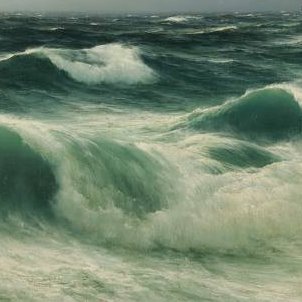
A Dutch Dogger Carrying Away her Sprit,1846
Oil paintings of seascapes and shipping in the Dutch style had been collected in Britain since the Dutch started making them in quantity. British artists also painted similar scenes to meet the demand from collectors. Clarkson Stanfield was regarded by many of his contemporaries as the best British marine oil painter of his time. His dramatic and accurate depiction of the sea in rough weather was thought preferable to Turner's misty and poetic paintings.
Here the artist shows a fishing boat in difficulties in a storm, with the power of the waves manifest against the tiny craft. The Dogger Bank in the North Sea was one of the best areas for fishing, but was prone to sudden squalls, making the life of a poor fisherman even more hard and dangerous.
Frederick Clarkson Stanfield (1793-1867) was a painter in oils and watercolours, mainly of landscapes and marine views. The son of an actor, J. F. Stanfield, he went to sea as a young boy and was press-ganged into the Royal Navy, but he left the service after being injured. He painted stage scenery for theatres in London, where he was a friend and rival to the Scottish painter, David Roberts (1796-1864) with whom he also collaborated, making dioramas and panoramas.
Source: Victoria and Albert Museum website
Clarkson Stanfield, View on the Scheldt, 1826


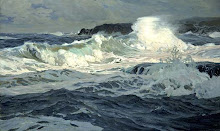
 Crossing the Bar, 1922, 26 x 38 inches






 Posts